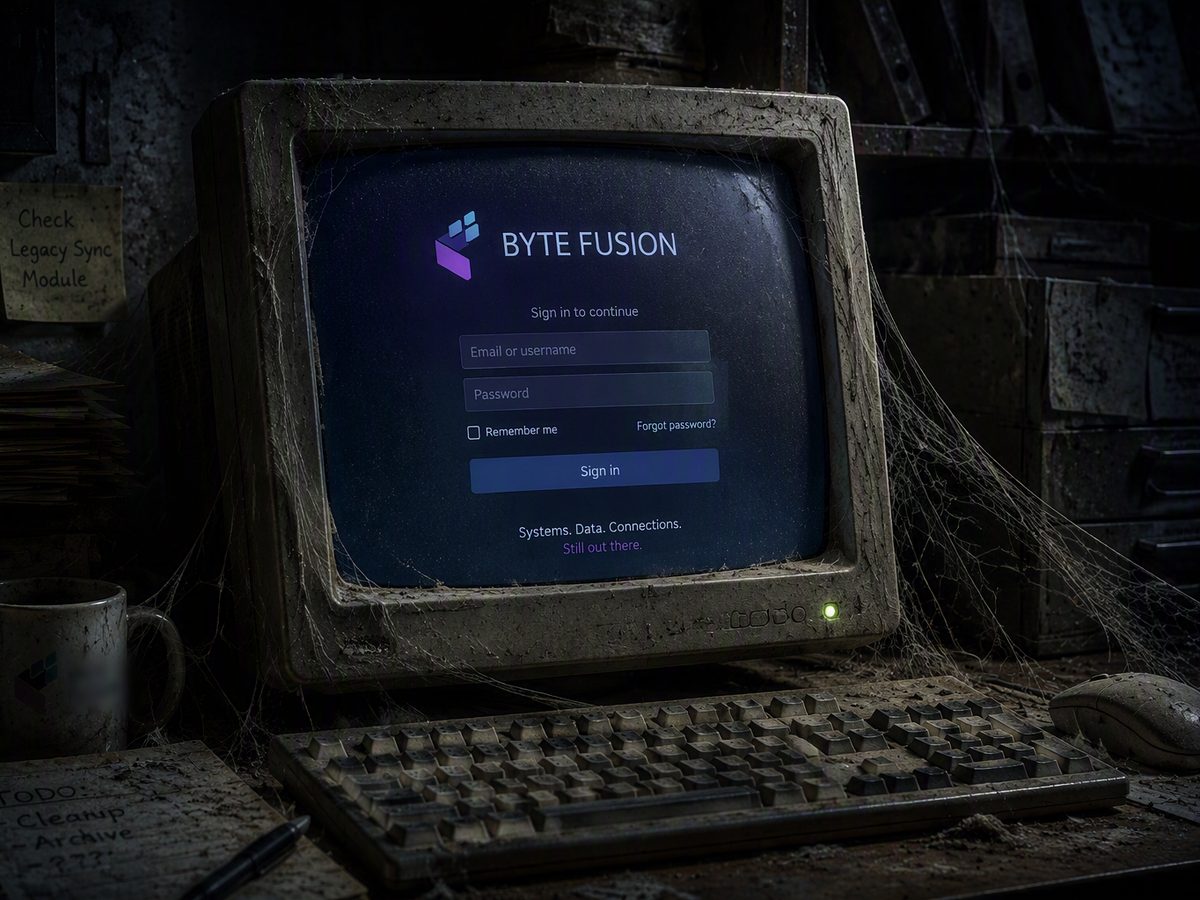
Why your business's biggest risk might be everything you've accumulated over the years
Think back to the software your business used five years ago. The email address you set up when you first registered your company. The online tool you tried for three months before switching. The supplier portal you created a login for and never used again.
Are those accounts still active? Do you remember the passwords? Does anyone?
For most business owners, the honest answer is:I have no idea.That's a problem and cybercriminals know how to exploit it.
Your footprint is bigger than you think
Every platform your business has ever used represents part of your digital footprint. Many of those platforms have been breached over the years, and their user databases leaked onto the dark web. If your email address appeared in one of those breaches, that information is sitting in criminal databases right now, often bundled with a password you may still be using somewhere else.
This isn't hypothetical. It's common for a single business email address to turn up in a dozen or more separate breaches stretching back a decade, discoverable using nothing but a name as a starting point. Now imagine what someone could assemble with your business name, email address, and company registration number.
Criminals are patient
Attackers rarely strike the moment they get in. In many documented intrusions, malware sits quietly for months, planted early in the year and revealed only when the attackers choose to act. During that silent window they watch, accumulate, and wait.
For a business, that patience is exactly what makes it dangerous. It might surface as a competitor who always seems to know your pricing. Or a ransomware demand that arrives out of nowhere after months of quiet reconnaissance you never noticed. By the time you see the damage, they've already been inside for a long time.
The POPIA dimension
South African businesses have legal obligations under POPIA. If you store or process personal information and virtually every business does, you have a duty to protect it. A breach doesn't just cost money. It can cost your reputation, your client relationships, and potentially significant regulatory penalties.
And the exposure is often hiding in plain sight. Many SMEs are storing personal data in old email threads, unsecured cloud folders, and WhatsApp chats that don't come close to meeting POPIA requirements.
How cybersecurity helps you get a grip
You can't protect what you can't see. The first job is to map what's out there and then lock it down.
Dark web and breach monitoring tells you which of your business email addresses and credentials have already been exposed in past breaches, so you can change passwords and close forgotten accounts before someone else uses them.
A firewall shows you exactly what's on your network and what traffic is flowing across it, eliminating blind spots.
Managed Detection and Response proactively hunts for signs that your environment has been silently accessed, catching the patient threats that automated tools miss.
Endpoint protection secures every device your team uses, including laptops, phones, and servers, so a single compromised machine doesn't become an attacker's way in. Paired with email authentication, it also helps stop criminals from impersonating your domain to your clients.
Together, these give you a single view of your environment and the ability to act on what you find.
Start with what you can't see
If you're not sure where your business stands right now, that's exactly where we start. Byte Fusion can show you where your data is already exposed, the old accounts, the leaked credentials, the gaps you didn't know were there, and what to do about them.
Get in touch for a no-obligation conversation.