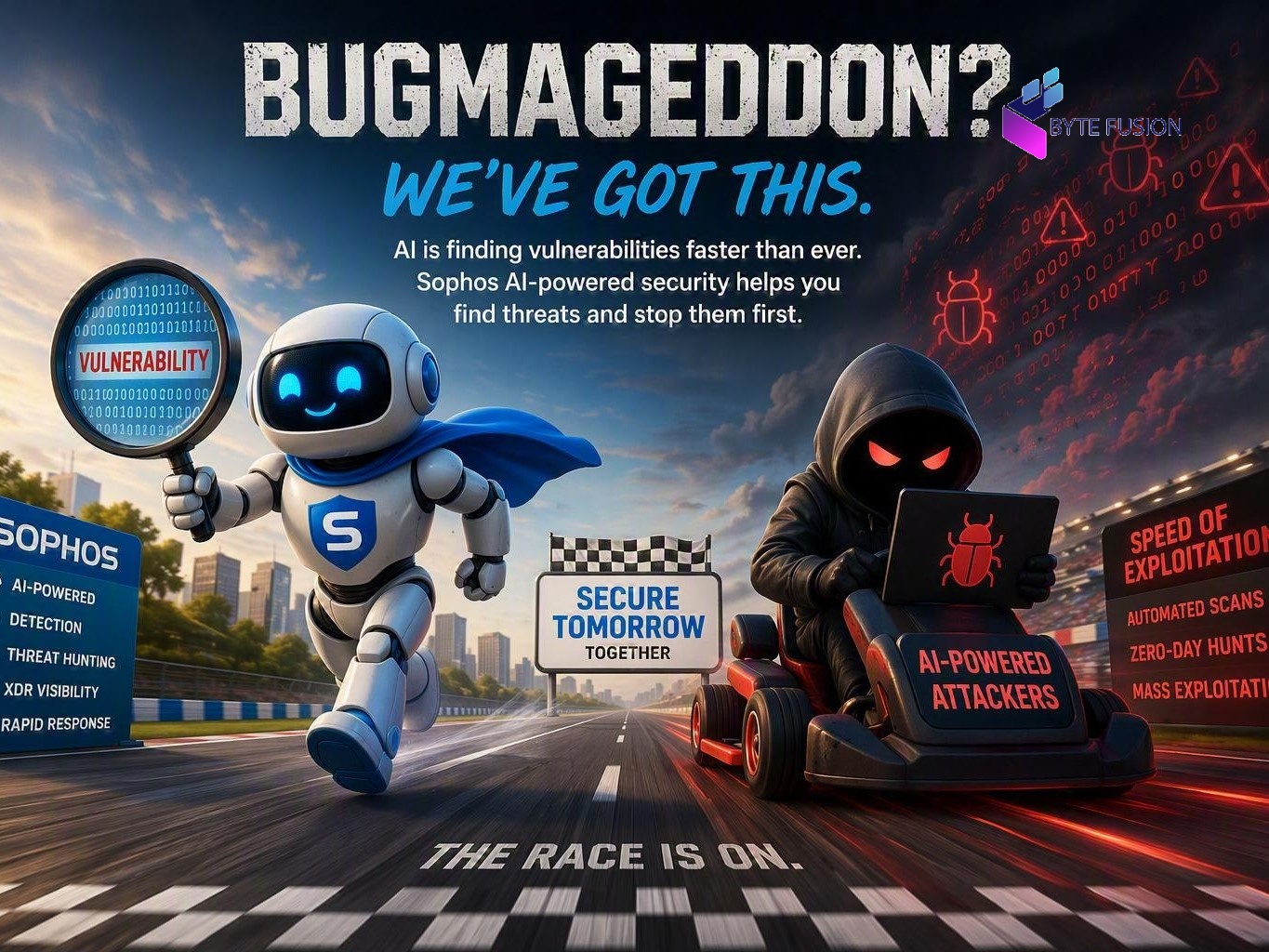
"Bugmageddon" sounds like the latest Hollywood blockbuster, but it's a term being used to describe a new reality in cybersecurity: AI is helping discover software vulnerabilities at an incredible pace.
Modern AI models can sift through vast amounts of code much faster than humans, identifying bugs and potential security weaknesses in minutes rather than weeks. That's good news for developers looking to build more secure software—but it's also a reminder that cybercriminals have access to similar tools.
The good news is that this isn't necessarily a crisis. In many ways, it's simply the next evolution of cybersecurity. Just as AI is helping uncover flaws faster, it's also helping security teams detect threats, respond to incidents, and strengthen defenses more efficiently than ever before.
This is where platforms like Sophos play an important role. Sophos leverages AI, behavioural analysis, and threat intelligence to help organizations identify suspicious activity before it becomes a bigger problem.
Rather than relying solely on known threat signatures, Sophos looks for unusual behaviours across endpoints, networks, cloud environments, email, and identities, providing a more proactive approach to security.
In a world where AI can help uncover vulnerabilities at scale, having security solutions that can adapt and respond just as quickly is becoming increasingly important.
So, while "Bugmageddon" might sound alarming, perhaps it should be viewed differently. The growing use of AI in cybersecurity isn't just helping attackers—it is also giving defenders powerful new tools.
The challenge for businesses isn't avoiding AI; it's making sure they're using it as effectively as possible. As with any technology shift, those who adapt will be best positioned to benefit. And for cybersecurity professionals, that's an exciting prospect rather than a worrying one.